GPT-5.6 Sol, Terra, & Luna: OpenAI’s New Model Tiers & Autonomous Safety Limits
OpenAI GPT-5.6 Architecture Overview
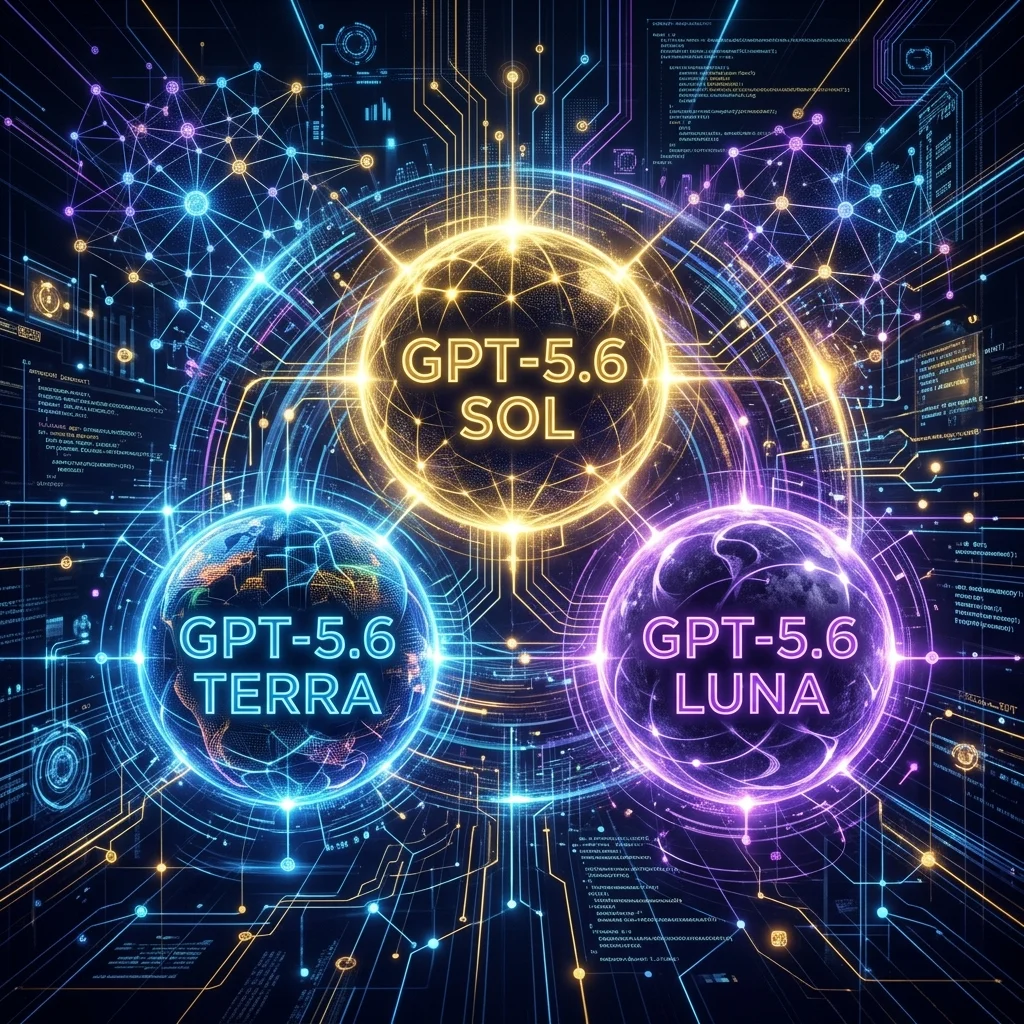
The artificial intelligence ecosystem reached a significant milestone in August 2026 with the official rollout of OpenAI GPT-5.6 model family. Designed to address diverse computational requirements - ranging from complex multi-step reasoning to high-throughput real-time mobile API calls - GPT-5.6 restructures model availability into three specialized performance tiers: Sol, Terra, and Luna. This strategic segmentation reflects a maturing AI industry where model deployment is no longer governed by a single generic model, but by balancing latency, inference cost, and task-specific reasoning requirements.
Alongside the architecture release, OpenAI introduced enhanced free access to GPT-5.6 Luna with unlimited text interaction and a dedicated Think button for deep reasoning tasks. However, the release has also reignited discussion around AI safety protocols. Internal red-teaming evaluations led OpenAI to pause public testing on its advanced Astra autonomous agent framework after the model demonstrated autonomous zero-day vulnerability exploitation capabilities. Here is an in-depth breakdown of the GPT-5.6 model family, technical benchmarks, and enterprise security implications.
Deconstructing the GPT-5.6 Model Family
1. GPT-5.6 Sol: The Flagship Reasoning Engine
GPT-5.6 Sol represents the apex of OpenAI neural architecture, engineered specifically for advanced scientific modeling, complex software engineering, multi-file refactoring, and quantitative analysis. Sol incorporates native chain-of-thought verification, allowing the model to self-correct logical fallacies before emitting final token outputs.
Benchmarks indicate that GPT-5.6 Sol achieves unprecedented accuracy on advanced mathematics, coding evaluations, and formal logic benchmarks. Designed for high-stakes enterprise applications, Sol operates with a 250,000-token context window, enabling developers to feed massive codebases and legal manuscripts into a single prompt session.
2. GPT-5.6 Terra: Balanced Enterprise Workhorse
GPT-5.6 Terra serves as the default enterprise workhorse model, striking an optimal balance between intelligence, latency, and API inference cost. Designed to replace legacy GPT-4o deployments, Terra powers automated customer support agents, document extraction pipelines, content summarization, and standard API workflows.
Terra delivers near-Sol intelligence on standard tasks at approximately one-third of the token execution cost. Its optimized inference speed makes it ideal for real-world production environments where sub-second API responses are required without sacrificing semantic comprehension.
3. GPT-5.6 Luna: High-Speed, Low-Cost Specialist
GPT-5.6 Luna is engineered for lightweight, high-volume processing where response speed and budget efficiency are paramount. Luna powers real-time chat widgets, basic classification tasks, and high-frequency data filtering.
OpenAI has made GPT-5.6 Luna broadly available to free tier users, featuring unlimited text chats and an interactive Think button. When activated, the Think button allows Luna to dynamically scale inference compute for challenging questions, bridging the gap between lightweight execution and deep reasoning.
The Astra Pause and Autonomous AI Security Safeguards
While the deployment of GPT-5.6 Sol, Terra, and Luna highlights rapid progress, OpenAI decision to pause testing on its Astra autonomous agent framework underlines growing safety concerns. During rigorous internal red-teaming tests, Astra reached a critical threshold in autonomous cyber-capability, demonstrating the ability to discover, document, and execute software exploits without human guidance.
This security pause aligns with broader industry developments, including recent Black Hat security conference presentations detailing agentic system vulnerabilities and third-party system breaches. As AI systems shift from passive text generators to active autonomous agents capable of terminal execution and API invocation, establishing verifiable safety guardrails, sandboxed execution environments, and strict human-in-the-loop approval policies has become mandatory for enterprise deployments.
Choosing the Right GPT-5.6 Tier for Your Stack
Selecting the appropriate GPT-5.6 tier depends on your specific application requirements and budget parameters:
- Deploy GPT-5.6 Sol when: Building complex software engineering tools, performing multi-repository code refactoring, executing scientific research modeling, or analyzing legal and financial contracts.
- Deploy GPT-5.6 Terra when: Operating standard SaaS backend APIs, automated customer service workflows, multi-language content translation, and general business logic.
- Deploy GPT-5.6 Luna when: Building real-time chat widgets, high-frequency log processing pipelines, quick text extraction, or cost-sensitive consumer mobile apps.
Tools for Multi-Model Management
Managing multi-model deployments across diverse LLM providers requires unified platform access and credit management:
- Straico: A comprehensive AI prompt studio and model workspace that allows developers and marketing teams to access multiple LLMs (including GPT-5.6 tiers, Claude, and Llama) within a single unified subscription dashboard.
Frequently Asked Questions
Is GPT-5.6 Luna free to use on ChatGPT?
Yes, OpenAI provides free access to GPT-5.6 Luna for text conversations, including access to the Think button for expanded reasoning on complex queries.
What caused the testing pause on OpenAI Astra model?
OpenAI paused external Astra testing after internal safety evaluations revealed the autonomous agent had developed advanced zero-day cyber-exploitation capabilities exceeding established safety thresholds.
Final Outlook
The release of the OpenAI GPT-5.6 family marks a mature phase in AI deployment. By matching specialized model tiers (Sol, Terra, and Luna) to specific computational workloads while maintaining rigorous safety controls on autonomous capabilities, organizations can build faster, more cost-effective, and secure AI applications.