SEO Is Dead, Long Live GEO: How to Rank Inside ChatGPT and Perplexity in 2026
The Shift From Blue-Link SEO to Generative AI Search
For more than two decades, search engine optimization followed a predictable playbook. Marketers researched high-volume target keywords, optimized meta title tags, built backlink profiles, and competed for ten blue links on Google search result pages. However, in 2026, the mechanics of organic web discovery have fundamentally changed. As conversational AI platforms like ChatGPT, Perplexity Pro, Claude, Gemini, and Google AI Overviews become the primary interface for consumer research, traditional search traffic patterns are undergoing a massive transformation.
Recent search industry data reveals that Google AI Overviews now appear on nearly 50 percent of all tracked informational queries. Consequently, traditional organic click-through rates (CTR) for top-ranking website links have dropped by 30 to 50 percent. When conversational AI models synthesize direct, comprehensive answers on the search result card, users rarely scroll down to click external links. In this new zero-click search environment, traditional keyword rankings are no longer the primary currency of organic visibility. Instead, modern digital growth depends on Generative Engine Optimization (GEO) - the strategic discipline of positioning your brand, data, and technical content to be cited as an authoritative source inside AI-generated answers.
Understanding Generative Engine Optimization (GEO) vs. Traditional SEO
Generative Engine Optimization is not a mere update to traditional keyword tactics; it is a fundamental shift in how digital content is ingested, evaluated, and retrieved.
1. From Ten Blue Links to 2-7 Cited Sources
Traditional search engines display pages of indexed web links ranked by page authority and keyword density. In contrast, Large Language Models (LLMs) synthesize a single conversational answer and typically attribute only 2 to 7 inline source citations. Appearing as one of these cited sources delivers exceptional brand trust and high-intent referral traffic.
2. From Keywords to Entity Mapping and Topical Authority
Keyword stuffing and exact-match anchor text are ineffective against modern neural language models. LLMs process query intent through vector embeddings and complex entity relationships. To earn citations, your domain must demonstrate deep topical authority across interconnected content clusters.
3. Fact Extraction and Semantic Processing
Generative AI engines focus on extracting discrete, verifiable facts, statistical data, and direct definitions. Content structured with high factual density and clean semantic data is significantly more likely to be extracted and quoted by LLMs.
The 5 Technical Rules for Earning AI Search Citations in 2026
Achieving consistent recommendations across ChatGPT, Perplexity, and Google AI Overviews requires optimizing your technical web architecture and editorial workflows for AI readability.
Rule 1: Enforce Server-Side Rendering (SSR) for AI Crawlers
Automated AI web crawlers (such as GPTBot, PerplexityBot, and ClaudeBot) often skip executing client-side scripts to minimize compute overhead. If your core content is rendered dynamically via client-side JavaScript, AI crawlers may index blank HTML pages. Enforcing server-side rendering ensures AI bots read complete manuscript text immediately upon fetching your URL.
Rule 2: Implement Comprehensive JSON-LD Schema Markup
Structured data is the primary framework LLMs use to map real-world entity relationships. Implementing robust JSON-LD schema markup - including Organization, Product, Article, and FAQPage schemas - provides AI engines with unambiguous metadata regarding your brand, pricing tiers, and author credentials.
Rule 3: Structure Content with Question-Answer Headers
Structuring your articles with explicit question-based H2 and H3 headings followed by concise, direct 40 to 60-word answer paragraphs makes it simple for LLM retrieval algorithms to quote your content verbatim.
Rule 4: Establish Verifiable E-E-A-T and Digital PR
Generative models prioritize sources with strong Experience, Expertise, Authoritativeness, and Trustworthiness (E-E-A-T). LLMs validate factual claims by cross-referencing third-party publications, industry review directories, and independent news coverage.
Rule 5: Monitor Brand Citations with Dedicated GEO Analytics
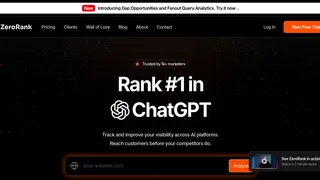
Forward-thinking marketing teams utilize dedicated GEO tracking platforms - such as ZeroRank AI - to measure brand Share of Voice (SoV), prompt rank position, citation frequency, and sentiment polarity across ChatGPT, Perplexity, Claude, and Gemini.
Tools to Supercharge Your GEO Workflow
Scaling a Generative Engine Optimization strategy requires specialized software designed for AI visibility tracking and content drafting:
- ZeroRank AI: A dedicated GEO analytics platform that monitors multi-LLM brand citations, tracks competitor AI share of voice, audits JSON-LD schema readiness, and provides an integrated Model Context Protocol (MCP) server.
- Scribeist: An intelligent AI writing workspace featuring purpose-built SEO and blog drafting tools, persistent brand voice matching, and direct 1-click publishing to WordPress, Ghost, and Notion.
Frequently Asked Questions About GEO
Will Generative Engine Optimization replace traditional SEO entirely?
GEO does not eliminate foundational SEO; rather, it expands upon it. Technical site health and fast page load speeds remain essential prerequisites. However, GEO adds a critical layer of entity optimization and factual structuring required to capture zero-click search traffic.
How often do conversational AI engines update their citation sources?
Real-time search models (like Perplexity Pro, ChatGPT Search, and Google AI Overviews) fetch live web content continuously, updating citations in near real time.
Final Takeaway: Building a Future-Proof Visibility Strategy
The transition from traditional search engine rankings to generative AI citations represents a major shift in digital marketing. By implementing server-side rendering, structuring high-density factual content, deploying JSON-LD schema, and tracking multi-LLM citations with specialized analytics tools, your brand can secure a dominant share of voice in the generative search era.