Categories
Overview
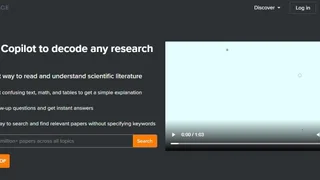
SciSpace, also known as Scispace, is an AI research assistant for reading, explaining, and discovering scientific literature. It helps students, academics, and R&D teams understand dense papers faster through highlighting, follow-up questions, citation-aware answers, and literature search that does not depend on manual keyword guessing alone.
Key Features
- Copilot paper explanations clarify confusing passages, equations, tables, and terminology directly inside research PDFs.
- Follow-up Q&A lets readers ask contextual questions about the paper they are viewing instead of leaving the document.
- Literature discovery surfaces relevant studies even when users cannot specify perfect keyword combinations upfront.
- Chrome Copilot extension brings SciSpace assistance into the browser workflow for faster access while reading online papers.
- Premium research toolkit bundles advanced AI literature features under SciSpace Premium for heavy review workloads.
- Citation-grounded responses keep explanations tied to the paper in view, which matters for literature reviews and grant writing.
How SciSpace Works
Researchers open a paper inside SciSpace or through the Copilot browser extension, highlight the section that is unclear, and request a plain-language explanation. They can continue the thread with follow-up questions about methods, results, or definitions. When exploring a new topic, SciSpace can recommend related studies based on the research question rather than forcing users to craft exhaustive keyword queries first.
Research Workflow Fit
SciSpace is designed for literature review stages where speed and comprehension matter: coursework summaries, thesis background sections, systematic review screening, and team onboarding to a new field. By keeping explanations adjacent to the source PDF, it reduces tab switching between the paper, search engines, and note documents.
Pricing and Access
SciSpace publishes a Premium offering for unlimited access to its AI research tools. Exact plan names, credit limits, and monthly prices should be confirmed on the current SciSpace pricing page because feature packaging can change as Copilot and premium research modules evolve.
Pros and Cons
Pros:
- Strong fit for graduate students and analysts who read technical PDFs daily.
- Highlight-to-explain flow mirrors how researchers actually struggle with papers.
- Discovery mode helps when keyword search alone misses adjacent studies.
- Browser extension keeps assistance close to online reading habits.
Cons:
- Premium pricing details were not fully visible during review and should be verified before subscribing.
- Explanations still require human verification for clinical, legal, or policy-critical interpretations.
- Teams with strict offline PDF policies may need to confirm extension and upload workflows against IT rules.
- Very niche or paywalled papers may remain inaccessible regardless of AI tooling.
Literature Review Scenarios
Graduate seminars, grant background sections, and market-intelligence literature scans all share the same bottleneck: dozens of PDFs with uneven writing quality. SciSpace reduces the time spent decoding notation, acronyms, and dense methods sections before a team can decide whether a paper belongs in the review set. For interdisciplinary projects, the follow-up question flow is especially useful when no single team member understands every subfield referenced in the bibliography.
Limitations
SciSpace cannot replace preregistered review methods, risk-of-bias scoring, or librarian-curated database searches when those are required by journal or regulator guidelines. Answers should be checked against the cited passages, especially for numerical results and causal claims. Organizations with export-controlled research should confirm upload policies before sending sensitive PDFs through any cloud assistant.
Who Should Use SciSpace
SciSpace is best for university researchers, PhD candidates, research assistants, and product teams surveying academic evidence. It is weaker for writers who only need general-purpose paraphrasing without citation context. Labs that demand reproducible, manually curated review pipelines should treat SciSpace as an acceleration layer, not a replacement for formal screening protocols.
Tool Overview
Pricing
Similar AI Tools
Focal
Focal was an AI-assisted research platform for searching private documents with cited answers, now closing with successor waitlist at Focal MD.
SciSummary
SciSummary is an academic AI tool that structures scientific paper summaries, analyzes figures, and organizes research libraries for students, faculty, and industry researchers.
Otio
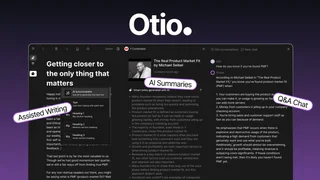
Otio is an AI research workspace that lets students and professionals query PDFs, videos, and articles across multiple models with verified citations and permanent source libraries.
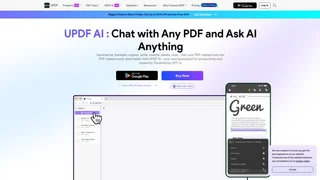
UPDF AI
UPDF AI is a GPT-5 and DeepSeek R1 powered assistant in the UPDF PDF editor, offering summarization, translation, chat with PDF and images, and mind map conversion across desktop, mobile, and web platforms.
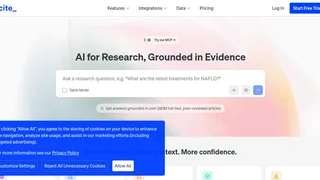
scite
scite is an AI-powered research platform that helps researchers, students, and librarians discover and evaluate scientific literature by grounding answers in peer-reviewed papers and showing whether later studies support or contrast each finding through Smart Citations.