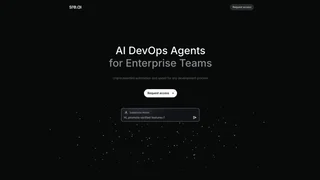
SRE.ai is an AI-native enterprise delivery platform built to unify DevOps workflows in one dashboard. The homepage positions the product around intelligent delivery, which makes it feel like infrastructure for operations rather than a lightweight automation add-on.
The site also stresses that the system can help with deployments, release orchestration, testing, monitoring, and Salesforce-related workflows. That gives the product a broad but coherent story: keep teams moving while the platform handles the repetitive delivery work.
Key Features
- Unify deployments, releases, testing, and monitoring.
- Support AI teammates that can code, test, and deploy around the clock.
- Provide guidance to reduce technical debt early.
- Keep release orchestration and rollback protection in one place.
- Support Salesforce development workflows.
- Maintain context across hybrid teams and handoffs.
Use Cases
- DevOps teams can centralize delivery work and monitoring.
- Salesforce teams can automate stable release workflows.
- Hybrid teams can keep context across time zones and handoffs.
- Operations leaders can reduce the amount of manual coordination in delivery.
Enterprise Flow
The product’s strength is that it treats delivery as a coordinated system. That makes it easier to think about releases as a managed workflow instead of a set of isolated manual steps.
Why It Matters
SRE.ai matters because enterprise delivery gets complicated when deployment, testing, monitoring, and release steps live in different places. By unifying those parts into one AI-native platform, the product aims to keep teams moving without losing control or visibility. That is especially useful for hybrid teams that need context to survive handoffs and for Salesforce teams that want stable automation. The product’s value comes from making delivery more coordinated, less fragile, and easier to operate at scale.
These products work best when the homepage explains the main workflow without making the user dig for it. A specific page makes the value easier to test and easier to trust.
That kind of clarity matters because utility tools usually win by cutting friction. If the user can see the outcome quickly, the product feels more credible and more useful.
The best pages in this slice show the task, the output, and the reason to care in the same place. That keeps the product story focused and avoids a vague AI-all-purpose pitch.
It also helps the product feel like something real teams can use every day.
That matters when the team needs reliability and speed at the same time.
It keeps the workflow grounded.